
Building a Legacy - Designing Your Family's Future
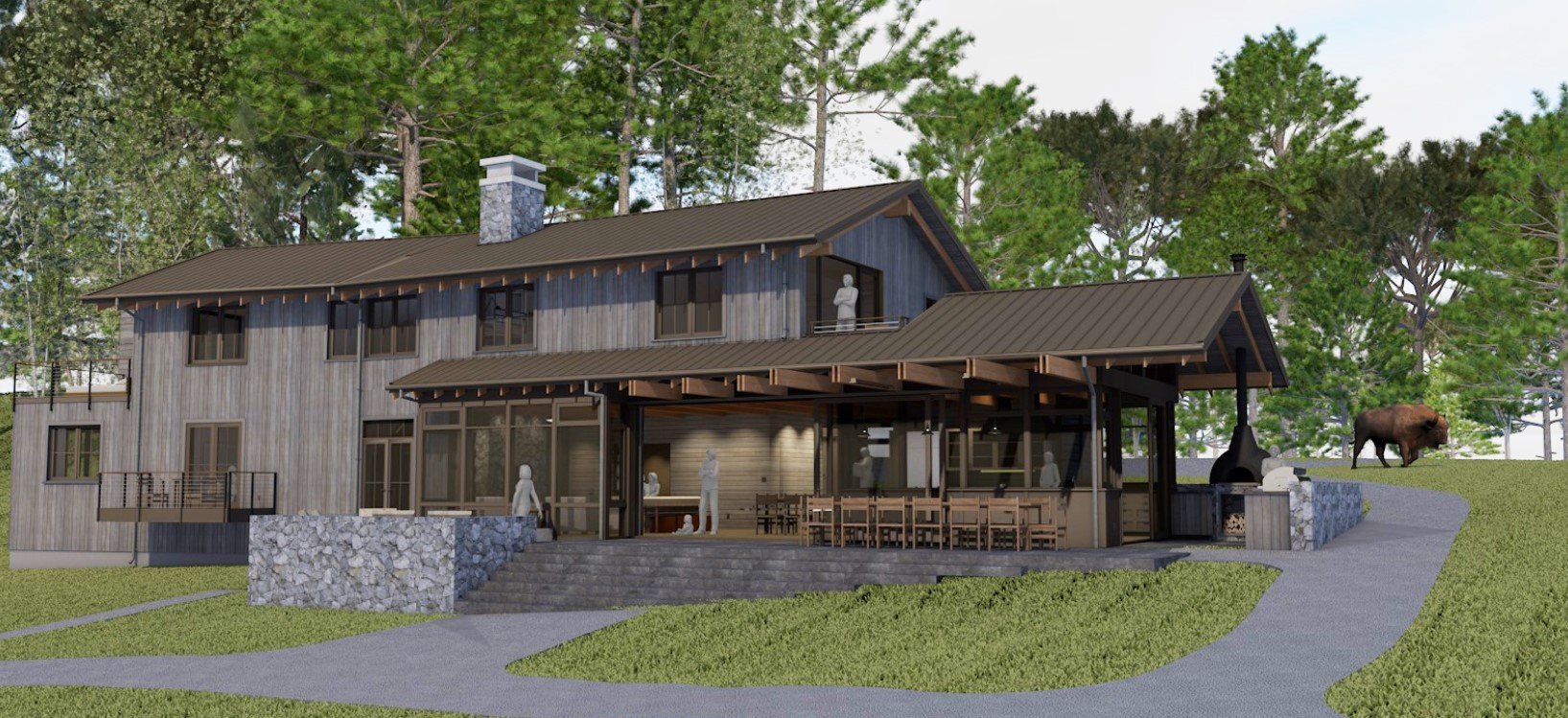
Orcas Island Retreat, DeForest Architects
When a family builds a custom home, a compound, or a private retreat, they’re rarely just thinking about where they’ll spend next summer. They’re thinking about Thanksgiving twenty years from now, about which child might want to raise their own kids nearby, about what they want to leave behind. Real estate — and particularly residences designed for generations — has always carried emotional weight. But increasingly, it carries significant financial and legal weight too.
Recently, John DeForest and Brett Smith of DeForest Architects sat down with Jim Falcone, Co-founder and Managing Director of Fulcrum Wealth Advisors, to talk about something they see regularly in architectural practice: the moment a dream home or family compound becomes a legacy asset — and everything that comes with that transition. Jim brings over 31 years of experience working with high-net-worth families, and his perspective on what makes these transitions succeed (or fail) is both candid and clarifying.
What follows is a conversation about why families hold onto significant real estate across generations, what gets in the way, and what the smartest families are doing differently. We’ve used AI to help consolidate and organize these discussions into a resource we hope you’ll find valuable.
It’s Not About the Property. It’s About the Values.
One of the first things Jim said that cut to the heart of the matter: “When I use the term legacy, it isn’t about the money. The money is just the gasoline you’re putting in the engine.”
That reframe matters. Families who successfully pass significant residential properties to future generations tend to start with a clear sense of what the property is actually for. Not its appraised value. Its meaning.
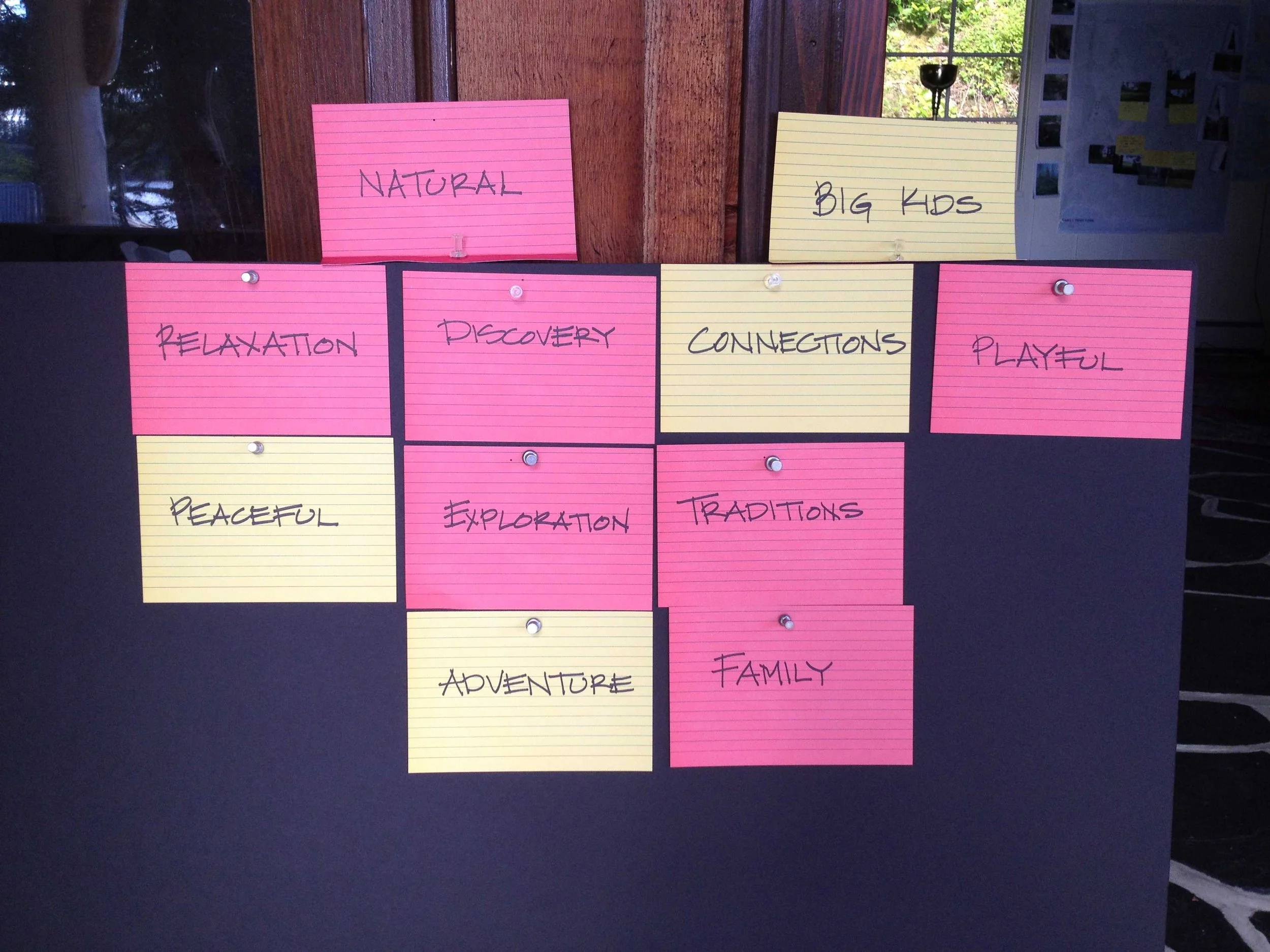
From our experience as architects working on multi-generational residential projects, we’ve seen this play out directly. When we ask clients “what is this place about?” — not how many bedrooms or what style of kitchen, but what values does this property represent? — it opens a very different kind of conversation. Families tell us they want a place to come together, to experience nature, to anchor family identity across distance and time. Those answers become what we call the guiding principles: a kind of mission statement for the property that shapes every design decision that follows.
Jim independently landed on the same term. “That’s exactly what popped into my head,” he said. “A mission statement.”
Designing for Generations, Not Just for Now
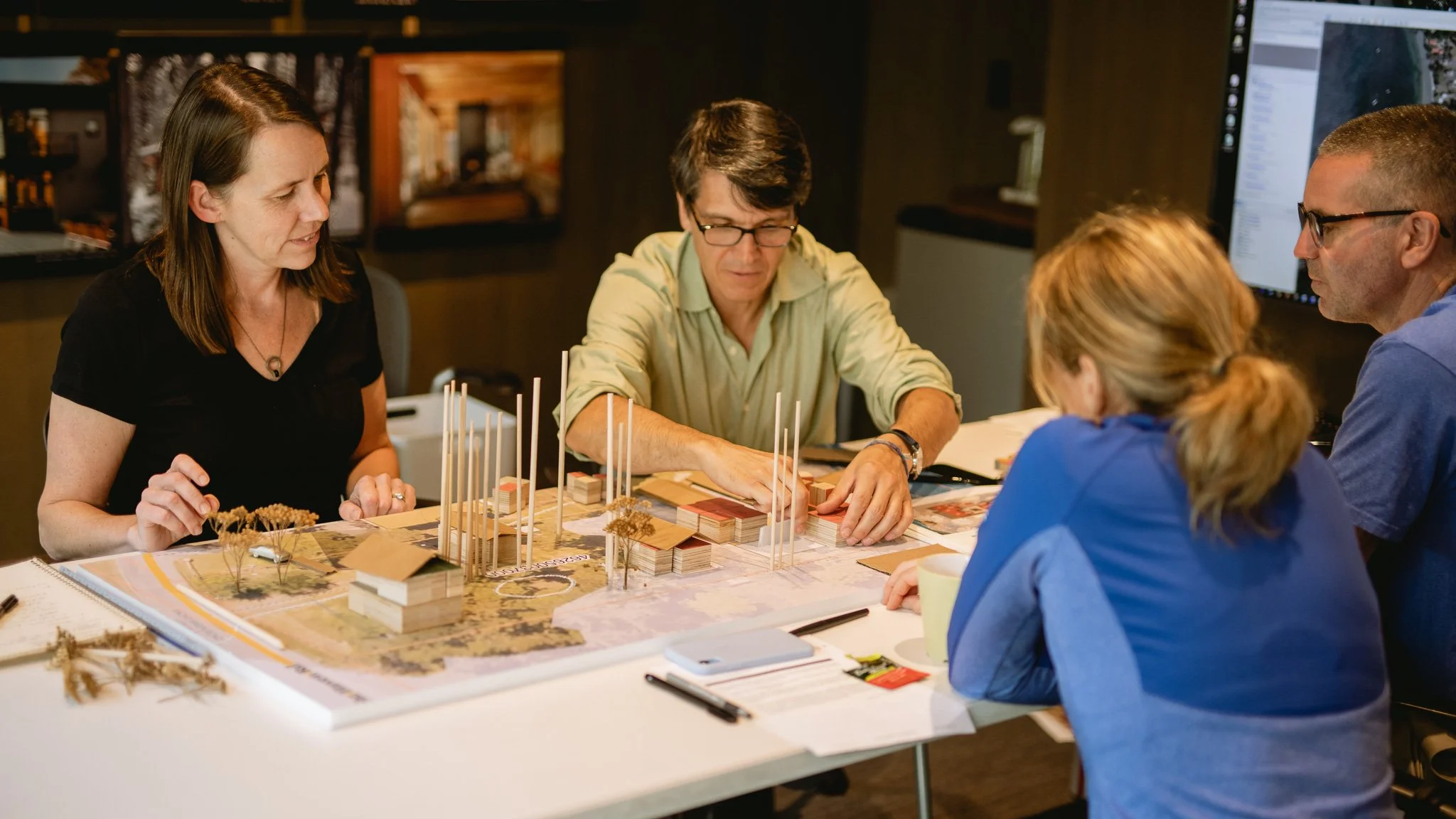
This is where architects can bring something genuinely useful to the table — and where we think our role goes beyond drawing buildings. Working alongside families at many different life stages has given us a longer view than clients are sometimes able to take themselves. When you’re designing your dream home, it’s easy to imagine the family as it is today. It’s harder to picture what that same family needs in fifteen years, or what the next generation will want when it’s their turn.
Designing a home optimized for a young family with small children works beautifully for about eight years. Kids grow. Privacy matters more. Adults age. The next generation has different ideas about gathering. These aren’t failures of imagination — they’re simply things that are difficult to see clearly from where you stand at the start of a project. Working with an experienced architect can help you and your family look around that corner — and design for where you’re going, not just where you are.
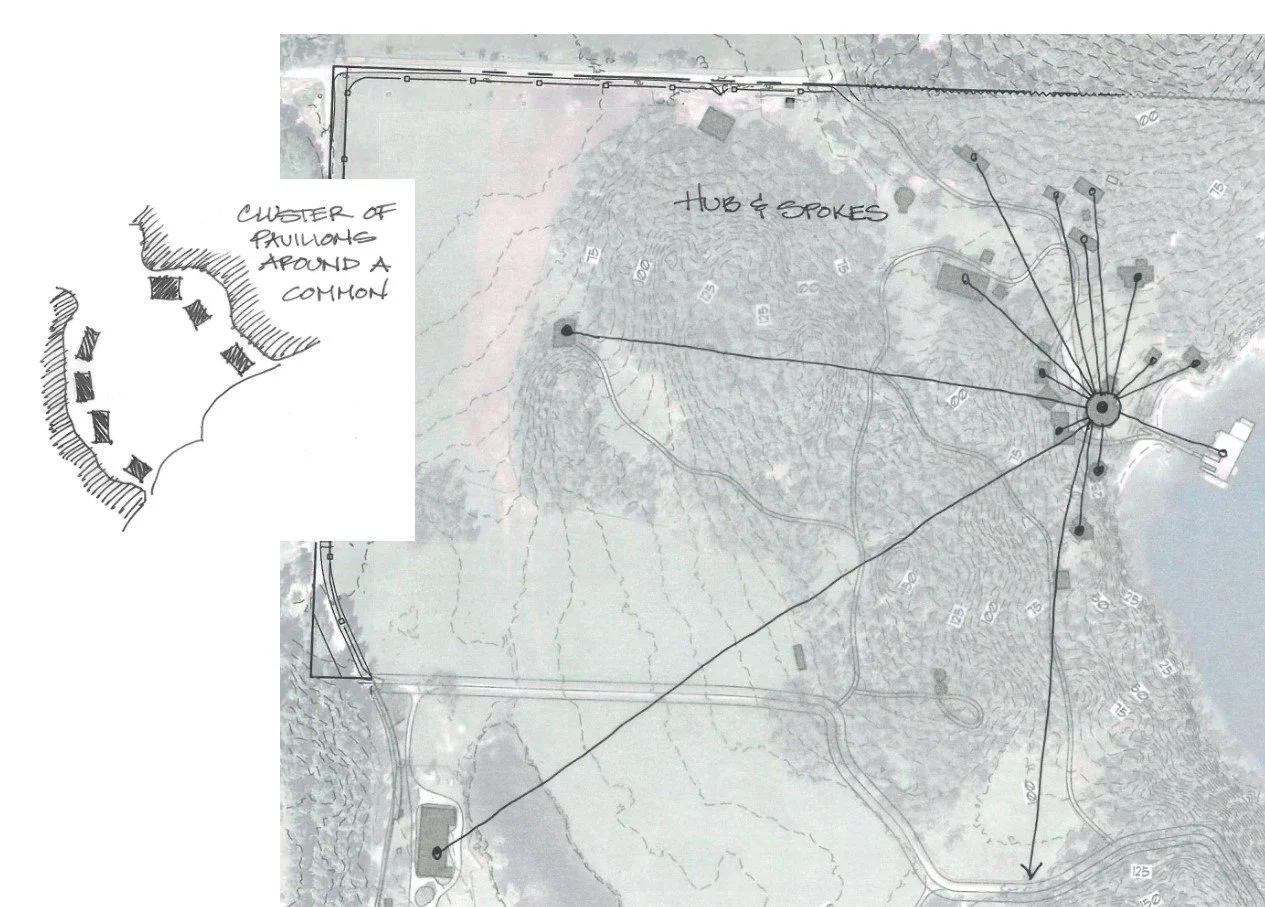
Early-stage site planning concepts for family compound, Allworth Design (landscape)
What Legacy Properties Have in Common
The properties that tend to hold together across generations share some design characteristics worth building in from the start.
Flexibility is the most important. Layouts that can accommodate different family configurations — young children, adult kids with their own families, aging grandparents — without requiring major renovation serve everyone better over time. Privacy and togetherness need to coexist: well-designed legacy properties allow extended family to be genuinely together without being constantly on top of each other. Check out this article on the DA website about design for a growing family.
Durability and low friction matter just as much as beauty. Properties built and maintained to a standard that doesn’t require constant reinvestment just to stay functional are far more likely to remain assets rather than become burdens. Jim made a pointed observation about properties that demand a large full-time staff to operate: that’s not legacy — that’s a problem waiting to happen.
Aging in place is another factor that often gets overlooked in the excitement of a new build. If the founders of the property plan to live there into their 70s and 80s, the design should reflect that. It’s far easier to plan for it at the start than to retrofit later.
When Dream Meets Reality: Funding and Governance
The emotional foundation of a building project matters enormously — but practical challenges have a way of surfacing quickly. Jim sees them cluster reliably around two issues: funding and governance.
On funding, his advice is blunt: calculate the ongoing cost of carrying the property — taxes, insurance, maintenance — and add 30%. Then make sure there’s a mechanism to fund it, ideally before the first generation passes. This might mean a trust with an income source attached, a dedicated reserve fund, or a structured ownership vehicle. Without this, even the most beloved property can fracture a family when the bills arrive and views diverge on who pays.
On governance, the challenge compounds with each generation. “It becomes less family and more business,” Jim noted — and that shift is uncomfortable but unavoidable. When a property passes from two parents to three children, and those children each have their own families and financial circumstances, the personal relationships that once held everything together become insufficient. Someone wants to sell their share. Someone wants to renovate. Someone uses it constantly; someone never does.
Jim has seen this end badly — including one family where the parents simply sold a beloved lakefront property rather than watch their children fight over it. “The kids got nothing,” he said. “That was the solution.”
The families who navigate this more successfully tend to have two things in common: a legal structure set up well in advance (trusts, LLCs, or family partnership agreements with clear decision-making rules), and professional administration that doesn’t rely on one well-meaning family member to do everything. “There’s always one kid who’s really good at it,” Jim said. “And that kid is 60 years old. She’ll do it — until she feels unappreciated.”
Ownership Structures That Actually Work
The right legal structure depends heavily on the family’s situation — their net worth, the number of beneficiaries, the state in which the property is held, and their goals. But Jim flagged a few consistent principles worth knowing.
If a property might ever be rented — even occasionally — it should be held in an LLC or similar structure, separate from the family’s other assets. If something goes wrong, you don’t want liability to reach across the rest of the estate.
Trusts with attached income sources can fund ongoing carrying costs and take some of the financial pressure off individual heirs. Right of first refusal clauses ensure that if one heir wants to exit, the property stays within the family before going to outside buyers.
State of domicile matters more than many clients realize—it’s worth asking your advisor whether your current setup is optimized. The broader takeaway: the legal and financial infrastructure around the property is not a detail to figure out later. It’s as important as the foundation.
The Family Meeting You Probably Haven’t Had
One of the most useful things Jim mentioned is a category of advisor we weren’t fully aware of: specialists in family meetings. These aren’t attorneys or financial planners. They’re closer to skilled facilitators — people who help families articulate shared values, surface disagreements, and establish the emotional and relational framework before the legal documents are drafted.
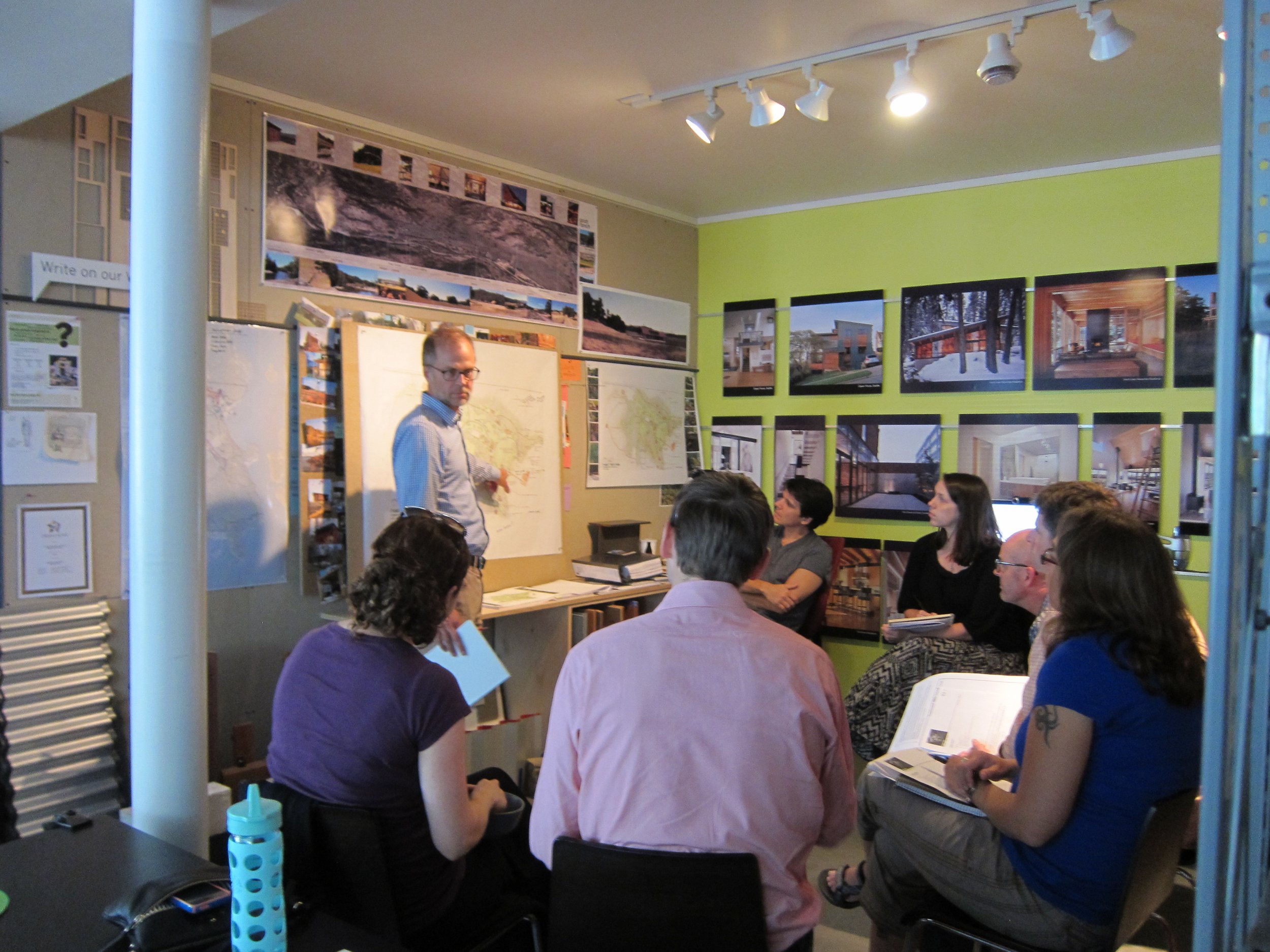
At DeForest Architects, we’ve played a version of this role using design as the catalyst. When a family is reimagining a legacy property, presenting two or three distinct scenarios — different ways the site could be organized, different ways the buildings could relate to each other — makes abstract values suddenly concrete. The family isn’t choosing between Scheme A and Scheme B. They’re discovering what they actually want the place to be. Check out this article on the DA website about how master planning can help.
What to Do Before You Break Ground
If there’s a single piece of advice that came through consistently in our conversation with Jim, it’s this: the time to think about generational transfer is before you break ground, not after you’ve moved in.
The financial structures, the legal framework, the family conversations — all of it is easier to put in place when decisions haven’t been made yet and relationships are still uncomplicated by inheritance. “Building it from the ground up,” as Jim put it, applies to more than just the structure.
Academia suggests that significant family wealth rarely survives past the third generation. The families that beat those odds tend to be the ones who treated the property not as a trophy or a tax strategy, but as an institution — one that required real infrastructure, shared values, and a governing framework built to outlast the people who created it.
An architecture firm with experience in multi-generational residential projects can be a meaningful partner in this early stage — well before a single wall goes up. Through design workshops, site evaluation, and early-stage budgeting conversations, we help families think through what they’re actually building: not just the structures, but the vision behind them. What the property needs to do for this generation, and what it needs to remain for the next. That kind of thinking, done early and done well, is what turns a beautiful home into something that truly lasts.
What’s Next?
If you’re planning a significant residential project — a primary home, a family compound, a multi-structure retreat — we’ve found that the most successful projects often start even before there is a clear program or site. Let’s start a conversation.
John DeForest | DeForest Architects, Founder and Principal | john@deforestarchitects.com
Brett Smith | DeForest Architects, Managing Principal | brett@deforestarchitects.com
Jim Falcone | Fulcrum Wealth Advisors, Co-founder & Managing Director | | jim.falcone@fulcrumwa.com